Why the Right Tactical Rifle Magazine Pouches Can Make or Break Your Loadout
Rifle magazine pouches tactical operators rely on aren't just accessories — they're mission-critical gear that directly affects how fast you can get back in the fight.
Quick Answer: Best Tactical Rifle Magazine Pouches at a Glance
| Pouch Type |
Best For |
Retention Method |
| Open-top single/double |
Speed reloads, patrol |
Elastic, shock cord |
| Closed-flap |
Harsh environments, debris |
Velcro, snap flap |
| Placard/multi-mag carrier |
Plate carrier integration |
Elastic, polymer magwell |
| MOLLE pouch |
Modular loadout builds |
MOLLE straps, bungee |
| Belt-mount pouch |
Patrol, plainclothes ops |
Friction, Tek-Lok |
Every second counts in a high-risk situation. A slow or fumbled reload isn't just frustrating — it can be dangerous.
The right pouch keeps your magazines secure during movement, yet accessible the instant you need them. The wrong one can collapse when empty, drop a mag at the worst moment, or cost you precious seconds under stress.
With dozens of configurations, materials, and attachment systems on the market, choosing the right setup can feel overwhelming. This guide cuts through the noise.
I'm Michael Wratten, VP of Marketing & Sales at Safe Pro USA and a 20-year law enforcement veteran with the Los Angeles and West Covina police departments — I've carried rifle magazine pouches tactical operators depend on in real field conditions, not just on a range. Having also served in leadership roles within the tactical and armor industry, I've seen how the right pouch design separates functional gear from gear that fails when it matters most.
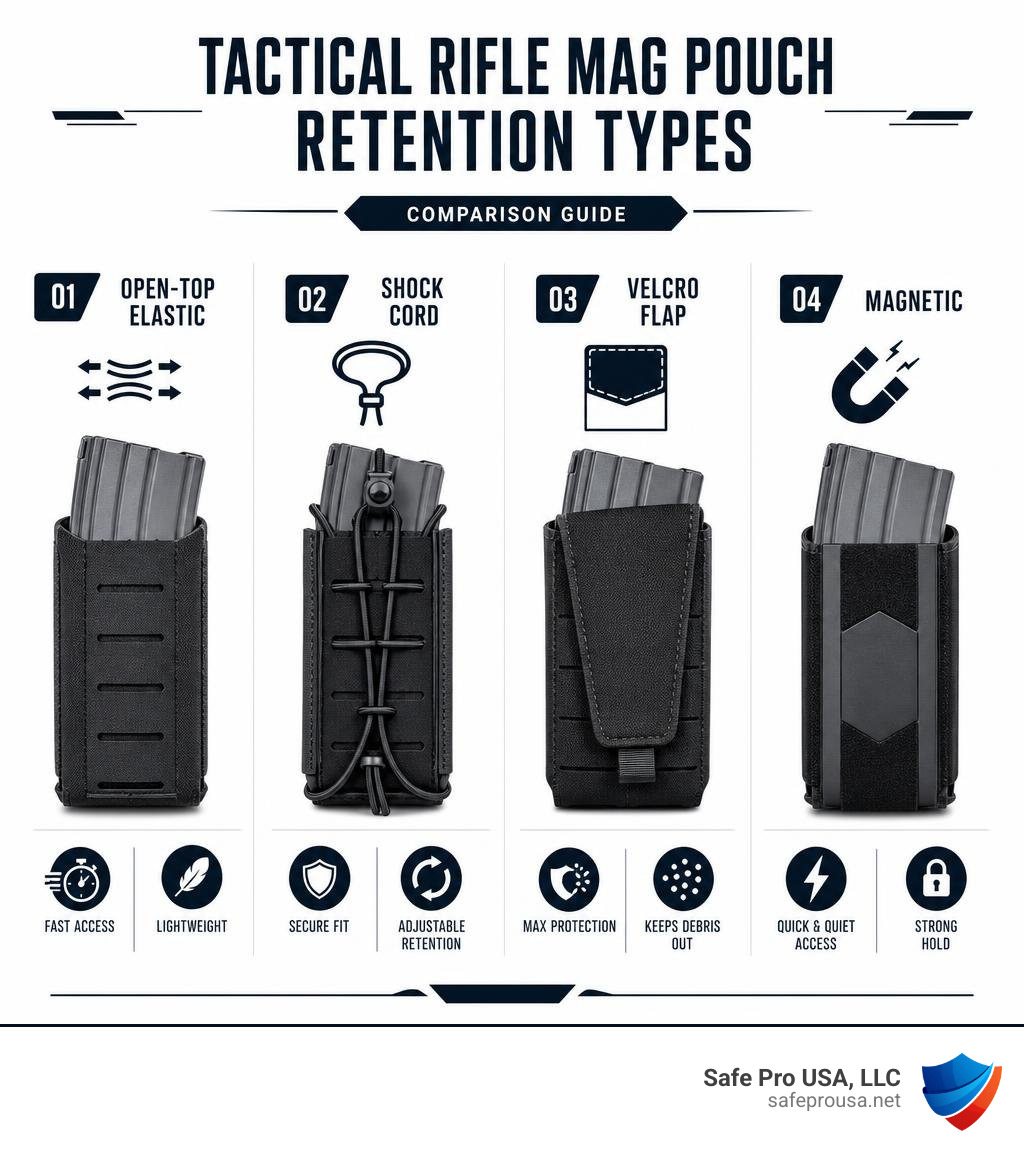
Core Designs of Rifle Magazine Pouches Tactical Operators Trust
When setting up your kit, the first decision you must make is the structural design of your pouches. Tactical environments demand different balances of retention, speed, and protection. Across the industry, the sheer variety of options—with some manufacturers offering dozens of distinct models—proves that there is no "one-size-fits-all" solution.
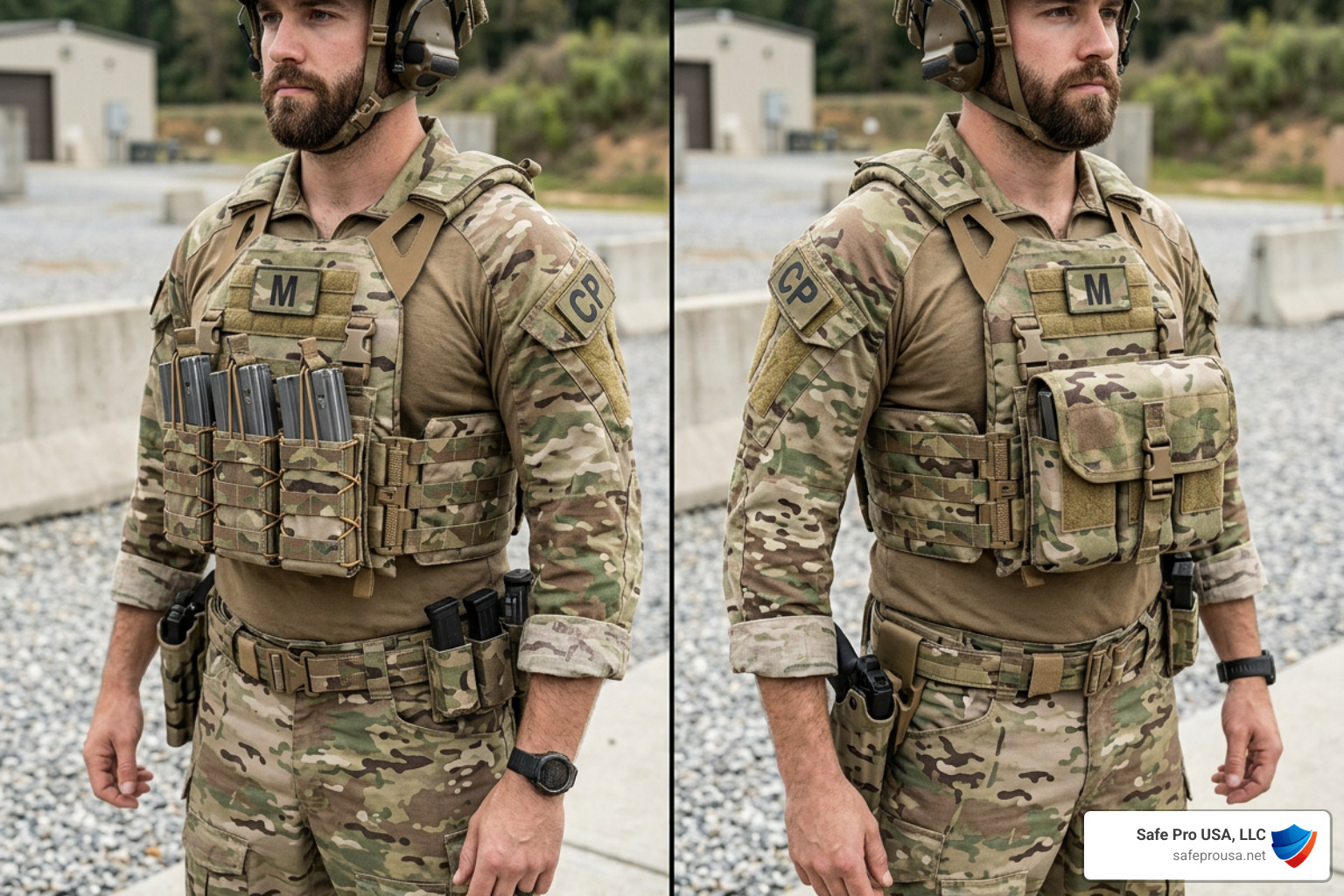
To help you choose, let's break down the three primary configurations: open-top, closed-flap, and hybrid placards.
| Feature |
Open-Top Pouches |
Closed-Flap Pouches |
Hybrid / Placard Systems |
| Reload Speed |
Extremely Fast |
Slower (requires clearing flap) |
Fast to Very Fast |
| Debris Protection |
Low (exposed feed lips) |
High (fully covered) |
Moderate to High (variable) |
| Retention Style |
Friction, Kydex, or Shock Cord |
Hook-and-loop / Buckle |
Elastic, polymer inserts |
| Profile |
Slim, low-profile |
Bulkier |
Modular, flat |
| Best Use Case |
CQB, competition, fast reloads |
High-crawl, maritime, dusty areas |
Plate carrier front panels |
Open-Top Pouches for Rapid Deployment
If your primary objective is a blazing-fast speed reload, open-top pouches are your best bet. These pouches eliminate the top cover entirely, leaving the magazine's baseplate exposed for an immediate grip.
To prevent your ammunition from falling out during dynamic movement, open-top pouches rely on active friction or mechanical retention. Many modern designs utilize integrated polymer inserts or Kydex-style wedges that pinch the magazine body. This friction retention keeps the magazine firmly in place even when inverted, yet releases smoothly when pulled upward.
Another popular design uses adjustable shock cord lacing along the sides, allowing you to tighten or loosen the pouch's grip depending on the magazine type. Because they don't have a flap to get in the way, these pouches also remain open when empty, allowing for easy, one-handed reinsertion during tactical reloads. If you need reliable, high-speed gear that integrates seamlessly with your loadout, check out our professional-grade options at Safe Pro USA Tactical Gear.
Closed-Flap and Hybrid Rifle Magazine Pouches Tactical Designs
While open-top designs dominate modern close-quarters battle (CQB) setups, closed-flap pouches remain a staple for military operations, wilderness patrols, and harsh environments.
A traditional closed-flap pouch uses a fabric cover secured by a velcro flap, snap, or buckle. This design offers maximum protection against dirt, mud, sand, and snow. If you are crawling through the brush or operating in dusty environments, covered pouches protect your magazine's feed lips and ammunition from debris that could cause weapon malfunctions.
For operators who want the best of both worlds, hybrid designs feature detachable flaps. These allow you to run the pouch open-top with shock cord retention during high-speed training, and then attach the protective flap when heading into wet or muddy field conditions. Some specialized hybrid designs even feature silent closure mechanisms, such as magnetic uniform covers or bungee-pull tabs, to eliminate the loud "rip" of velcro during stealth operations. To find robust, field-tested configurations engineered for maximum durability, explore our American-made Safe Pro USA Nylon Gear.
Modular Placards and Multi-Mag Carriers
In recent years, the tactical industry has shifted heavily toward modular placard systems. Instead of weaving individual MOLLE pouches onto your plate carrier one by one, a placard is a pre-configured panel—typically holding three 5.56 magazines—that attaches to the front of your carrier using heavy-duty velcro backing and side-release buckles (often referred to as the SwiftClip system).
Placards allow for rapid loadout customization. If you need to switch from a standard 5.56 rifle platform to a .308 precision setup or a submachine gun, you can swap the entire front placard in under thirty seconds. These multi-mag carriers often incorporate advanced design features, such as funneled polymer magwells that flare outward. This guide-rail effect makes it incredibly easy to guide a fresh magazine back into the pouch by feel alone, keeping your eyes up and focused on the threat.
Materials and Construction Features for Extreme Durability
Tactical gear takes a beating. Whether you are scraping against concrete walls, low-crawling through gravel, or operating in torrential downpours, the materials used in your rifle magazine pouches tactical setup dictate how long your gear will survive.
-
Cordura Nylon (500D vs. 1000D): Historically, 1000-denier (1000D) Cordura was the industry standard for military nylon gear. While incredibly tough and highly wear-resistant, 1000D is heavy and can absorb a significant amount of water. Modern tactical designs heavily favor 500D Cordura. It offers excellent tear resistance and abrasion durability at a fraction of the weight, keeping your loadout light and agile.
-
Advanced Laminate Fabrics: The cutting edge of tactical gear construction involves multi-layer laminate fabrics, such as Squadron or Tegris. These materials bond high-strength nylon with composite sheets. This creates a fabric that is incredibly thin, lightweight, and virtually impossible to tear, making it perfect for high-stress load-bearing gear.
-
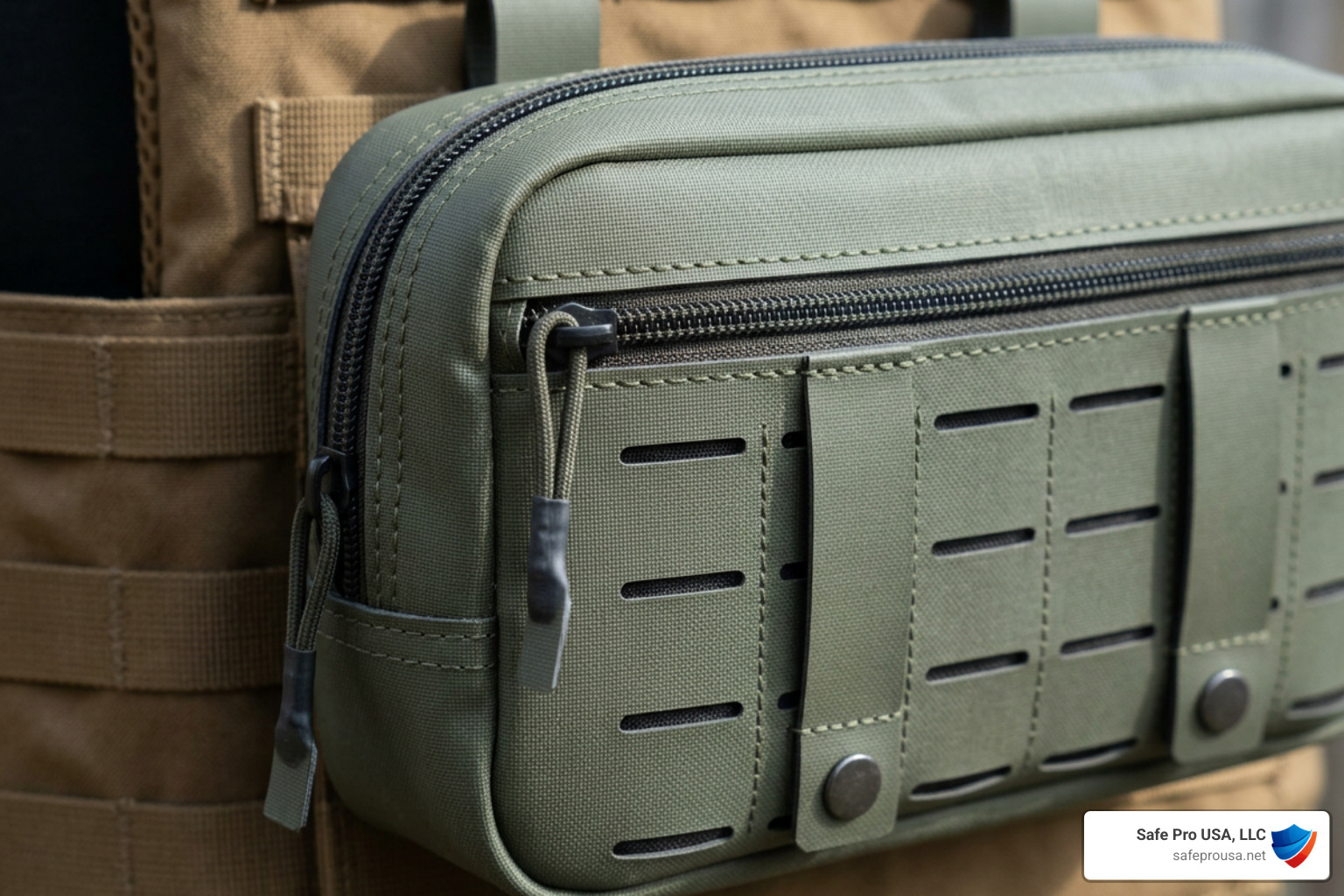
Laser-Cut PALS Webbing: Traditional pouches feature rows of heavy nylon webbing sewn onto the exterior for mounting extra gear. Modern high-end pouches replace this with laser-cut PALS slots cut directly into the laminate fabric. This drastically reduces the pouch's profile, eliminates hundreds of stitches that could fail over time, and sheds unnecessary weight.
-
Drainage Grommets and Self-Cleaning Bases: A pouch that holds water is a liability. Premium tactical pouches feature metal drainage grommets or open-mesh bottom panels at the base. These allow water, mud, and fine sand to drain out immediately, ensuring your magazines stay clean and functional.
-
Infrared Reduction (IRR) and TrueLock Materials: For military and specialized law enforcement personnel, operational concealment extends beyond the visible spectrum. Standard commercial nylon can glow brightly under night vision devices (NVDs). Professional-grade pouches utilize IRR-treated fabrics and solution-dyed TrueLock fibers to ensure they blend in under infrared light, preserving your tactical advantage in low-light environments.
Retention Methods and Attachment Systems Explained
A tactical pouch must perform a delicate balancing act: it must hold your magazines securely enough that they won't fall out during a sprint or jump, yet release them instantly when you pull to reload.
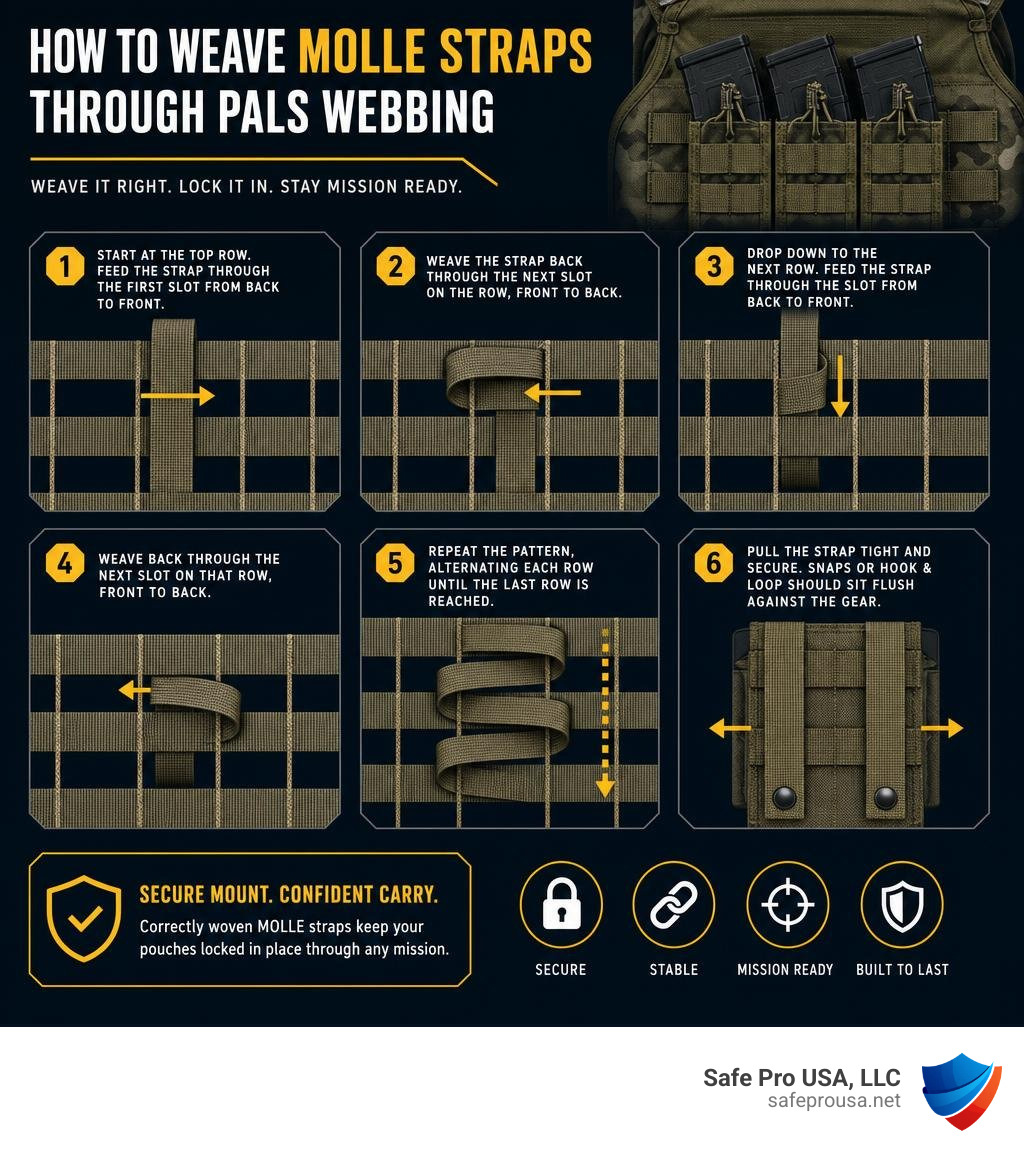
To achieve this, manufacturers use a variety of retention methods and attachment systems:
-
Shock Cord and Bungee Pull-Tabs: This classic system uses an elastic cord that loops over the top of the magazine's floorplate. It provides absolute security during dynamic movement. To draw the magazine, you simply grip the pull-tab (often made of high-grip material like Hypalon), slip the cord off to the side, and pull.
-
Double Elastic Sidewalls: Many low-profile pouches use heavy-duty elastic webbing for the sides of the pouch. This naturally compresses the magazine, providing excellent passive retention without requiring any straps or cords.
-
Adjustable Screw Tension: Hard-shell polymer and Kydex pouches often feature adjustable tension screws. By tightening or loosening these screws, you can customize the exact amount of force required to draw the magazine, tailoring the pouch for duty use, range training, or competition.
-
MOLLE and PALS Attachment: The standard for mounting pouches to plate carriers, chest rigs, and tactical belts. Traditional MOLLE uses woven fabric straps with snap closures. Modern systems often utilize lightweight, semi-rigid polymer MOLLE sticks or laser-cut tuck tabs, which secure the pouch tightly to the host platform without adding bulk.
-
Belt Mounts and Tek-Lok Systems: For law enforcement patrol shifts, security details, or range use, belt-mounted pouches are highly popular. Systems like the Tek-Lok clamp securely around duty belts ranging from 1.5 to 2.25 inches wide. They often feature 360-degree angle adjustability, allowing you to cant the pouch for a more natural, ergonomic draw.
If you are looking to build a highly adaptable, modular platform, check out our versatile mounting solutions at Safe Pro USA Modular Pouches.
Frequently Asked Questions
How do I choose the right rifle magazine pouches tactical setup for my plate carrier?
When configuring a plate carrier, prioritize profile reduction, accessibility, and balanced load distribution. If you run a heavy front loadout with bulky triple-stacked pouches, it will be difficult to get close to the ground when prone.
For most operators, a flat, single-layer triple placard on the front of the plate carrier offers the perfect balance. It keeps three magazines readily accessible on your chest while maintaining a slim profile.
If you need to carry more ammunition, mount additional single pouches on the sides of your cummerbund or transition them to a dedicated tactical belt. This distributes the weight away from your spine and keeps your front clear for administrative work or medical emergencies.
Can one pouch accommodate both 5.56 and 7.62 caliber magazines?
Traditionally, pouches were caliber-specific; a pouch built for a slim 5.56 AR-15 magazine would not fit a wider, curved 7.62x39 AK magazine or a bulky .308 Winchester magazine. However, modern multi-caliber pouches solve this issue.
By utilizing flexible elastic sidewalls, adjustable shock-cord lacing, or expanding L-shaped plastic side reinforcements, these versatile pouches expand to hug larger magazines tightly, yet contract to securely hold smaller calibers. While highly convenient for operators who switch weapon platforms frequently, keep in mind that dedicated, caliber-specific pouches will always offer the slimmest possible profile.
How do I clean and maintain my tactical nylon gear?
To maximize the lifespan of your tactical pouches, clean them regularly. Do not throw your nylon gear into a washing machine or dryer, as the heat and harsh agitation can damage water-resistant coatings, weaken elastic fibers, and warp polymer inserts.
Instead, follow these steps:
- Remove all magazines, plastic inserts, and retention cords.
- Shake out any loose dirt, sand, or debris.
- Hand-wash the pouch in warm water using a mild, non-detergent soap (such as baby shampoo or specialized gear cleaner). Use a soft-bristled brush to scrub away stubborn mud or salt buildup from sweat.
- Rinse thoroughly with clean, cold water.
- Hang the pouch to air-dry in a well-ventilated area out of direct sunlight, as prolonged UV exposure can degrade nylon fibers over time.
Conclusion
At Safe Pro USA, we know that your tactical efficiency depends on the synergy of your entire loadout. From the plates that protect your core to the rifle magazine pouches tactical setups you use to feed your defensive tools, every piece of gear must work together seamlessly.
Investing in high-quality, American-made pouches ensures that your ammunition remains secure, clean, and instantly accessible when the pressure is on. Once you have optimized your ammunition storage and reload speed, ensure your vital organs are just as secure. Complete your protective system and Upgrade your loadout with premium armor plates designed to withstand the toughest environments.


