What You Need to Know Before Buying Level 3 Steel Plates
Level 3 steel plates are hard armor panels rated by the National Institute of Justice (NIJ) to stop rifle-caliber threats — most notably the 7.62x51mm M80 NATO Ball round. If you're looking to buy, here's the fast answer:
Quick Reference: Level 3 Steel Plates at a Glance
| Feature |
Level 3 Steel |
| NIJ Standard |
0101.06 Level III |
| Primary Threat Stopped |
7.62x51mm M80 NATO Ball |
| Typical Weight (10x12) |
6.9 – 9+ lbs per plate |
| Stops M193 (5.56mm)? |
Generally no |
| Stops M855 Green Tip? |
Varies by plate |
| Spall Risk? |
Yes — coating required |
| Shelf Life |
10 – 25 years (varies) |
| Civilian Legal? |
Yes, except NY and CT |
Steel is one of the oldest and most recognized materials in hard armor. It's durable, capable of taking multiple hits, and widely available. But the ballistic threat landscape has shifted — and so have the materials available to meet it.
Ceramic and UHMWPE (ultra-high-molecular-weight polyethylene) plates now offer lighter weight, better coverage against common 5.56mm threats, and zero spall risk. Understanding where steel fits — and where it falls short — is critical before you make a purchase decision.
I'm Michael Wratten, VP of Marketing & Sales at Safe Pro USA and a 20-year law enforcement veteran who has spent over two decades evaluating level 3 steel plates and ballistic protection solutions across military, law enforcement, and civilian markets. That hands-on experience shapes every recommendation in this guide.
Understanding Level 3 Steel Plates and NIJ Standards
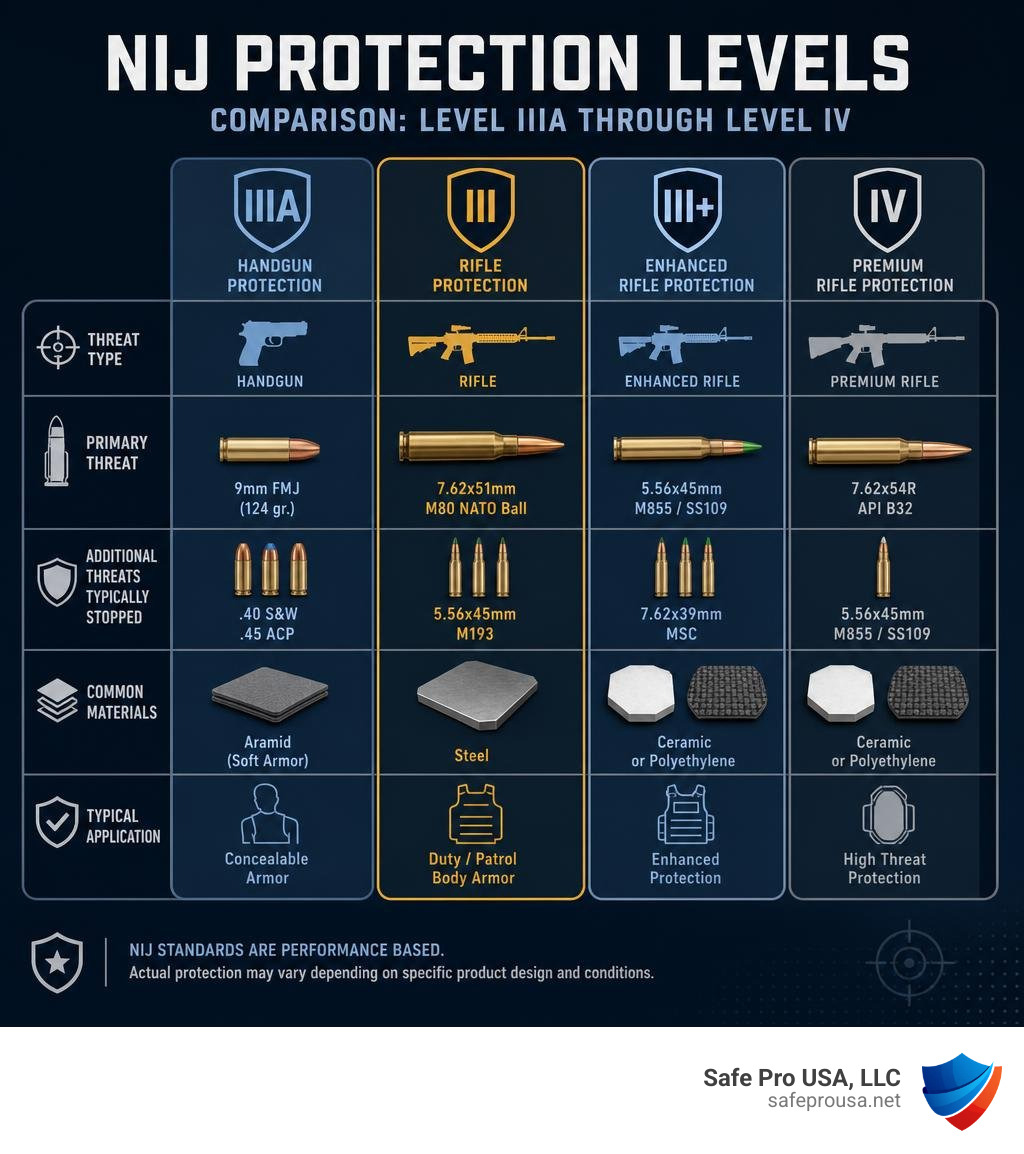
When evaluating hard armor, the National Institute of Justice (NIJ) serves as the gold standard for performance testing. Under the current widely referenced standard, NIJ 0101.06, Level III armor is the first tier of hard protection designed specifically to defeat rifle-caliber rounds. To earn a Level III rating, a plate must successfully stop at least six shots of 7.62x51mm M80 NATO Ball ammunition traveling at a nominal velocity of 2,780 feet per second (fps).
While steel has historically been used to meet this benchmark, the material's physical properties create unique challenges under modern threat profiles. When you look at how standard steel plates behave under pressure, they rely entirely on their surface hardness to shatter incoming projectiles. However, ballistic certification is not just about stopping a single caliber; it is about ensuring predictable, repeatable protection across a spectrum of operational hazards. For a deeper dive into how these standards protect you, read our ballistic armor plates the essential guide to choosing the right protection.
As we transition into the newer NIJ 0101.07 standards, the testing protocols are becoming even more stringent. The legacy "Level III" designation is shifting to the RF1 standard. This update is designed to better reflect the real-world threats faced by law enforcement and military personnel on domestic soil, introducing testing requirements that expose the structural vulnerabilities of traditional steel.
While level 3 steel plates can reliably stop the standard 7.62x51mm M80 NATO round, their performance against high-velocity, small-caliber threats is a major point of concern. The most common rifle round in the United States is the 5.56x45mm (M193), typically fired from AR-15 platforms.
Because the M193 is a lightweight, incredibly fast projectile-often exceeding velocities of 3,150 fps out of standard barrel lengths-it poses a severe penetration threat to steel. When a high-velocity lead-core round like the M193 strikes a traditional steel plate, the sheer speed of the impact can cause the round to burn or slip through the steel alloy, even if the plate easily stops heavier, slower rounds.
Conversely, the M855 "Green Tip" round, which features a mild steel penetrator core, travels at a slightly lower velocity. While steel plates can sometimes defeat the M855 due to their surface hardness, they frequently fail against the faster M193. This creates a dangerous paradox where an operator might be protected against a steel-core penetrator but vulnerable to a standard, widely available commercial varmint round. For comprehensive guidance on matching your armor to realistic threats, see our ballistic armor plates the essential guide to choosing the right protection.
The Impact of NIJ .07 RF1 Standards on Steel Armor
The introduction of the NIJ 0101.07 standard represents a massive shift in how hard armor is certified. Under the new RF1 specification, plates must not only defeat the traditional 7.62x51mm M80 Ball but must also successfully stop the 5.56x45mm M193 round at its maximum operational velocities.
This change is highly significant for the future of steel armor. Because traditional steel plates inherently struggle with high-velocity 5.56mm rounds, meeting the new RF1 standards requires steel manufacturers to significantly increase the thickness and hardness of their alloys. Doing so adds substantial weight to an already heavy material, making the plates highly impractical for mobile operators.
In practice, the NIJ .07 standards are paving the way for the industry to move entirely away from steel, focusing instead on advanced composite materials that pass these multi-threat tests with ease. To learn more about how modern plates are adapting to these new rules, check out our breakdown of hard armor rifle plates.
Steel vs. Ceramic and Polyethylene (UHMWPE) Armor
To understand where to invest your trust, it helps to compare the three primary materials used in hard rifle plates today: ballistic steel, technical ceramics, and Ultra-High-Molecular-Weight Polyethylene (UHMWPE).
| Performance Metric |
Ballistic Steel |
Technical Ceramic |
Polyethylene (UHMWPE) |
| Weight (per 10x12 plate) |
6.9 to 9.5 lbs |
4.0 to 7.5 lbs |
3.0 to 3.5 lbs |
| Thickness |
Thin (0.21" - 0.34") |
Medium (0.75" - 1.0") |
Thick (1.0" - 1.2") |
| M193 (5.56mm) Protection |
Poor (fails at high velocity) |
Excellent |
Excellent |
| M855 Green Tip Protection |
Fair to Good |
Excellent |
Poor (unless hybridized) |
| Multi-Hit Durability |
Exceptional |
High (modern designs) |
Exceptional |
| Spall & Fragmentation Risk |
High (dangerous splash) |
None (contained) |
None (contained) |
| Buoyancy |
Sinks rapidly |
Sinks |
Floats |
For a deeper look at the performance of non-metallic options, read our guide on ceramic rifle plates.
Why Modern Operators are Moving Away from Level 3 Steel Plates
The most immediate drawback of steel armor is the weight penalty. A standard 10x12 inch steel plate weighs between 7 and 9.5 pounds, depending on the thickness and the presence of a spall-mitigation coating. When you place a front and back plate into a carrier, you are instantly strapped into 14 to 19 pounds of dead weight—and that is before adding ammunition, water, radios, or medical gear.
This weight creates severe user fatigue during extended operations. Whether you are a patrol officer on a twelve-hour shift, a tactical operator staging for a high-risk warrant, or a citizen preparing for home defense, carrying excessive weight drastically reduces your mobility, speed, and endurance. Over time, this physical strain can lead to chronic back, knee, and hip injuries.
Modern operators prioritize speed and agility as active forms of protection. By reducing your plate load, you can move faster, react quicker, and stay in the fight longer without exhausting your cardiovascular system. To explore how reducing weight changes your tactical setup, read our article on armor plates.
The Superiority of Ceramic and UHMWPE Materials
Ceramic and UHMWPE plates represent the cutting edge of personal protective technology. Rather than relying on brute force to stop a bullet, these materials use advanced physics and material science to neutralize ballistic energy.
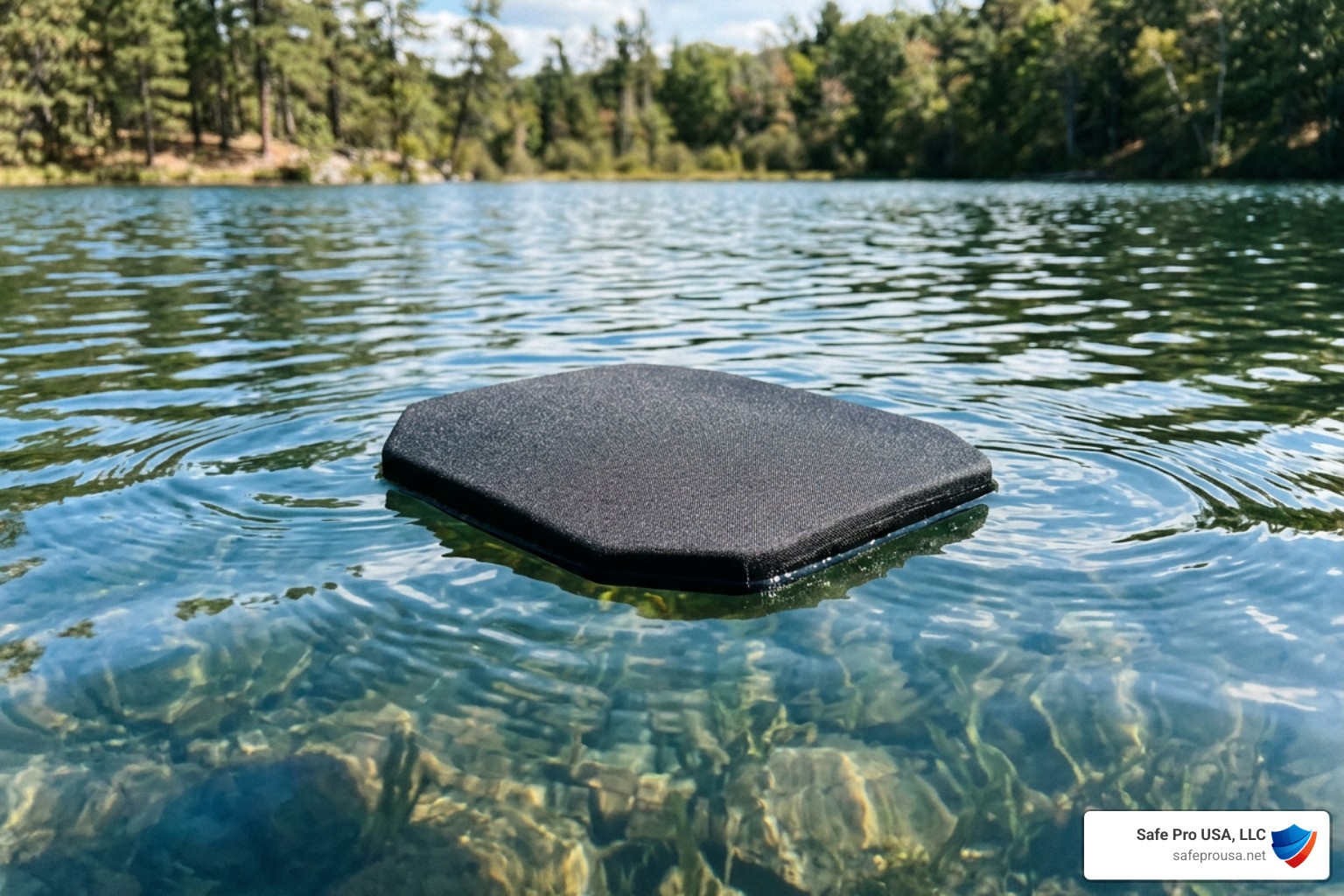
UHMWPE plates are manufactured by pressing layers of unidirectional polyethylene fibers under extreme heat and pressure. The resulting material is incredibly strong yet incredibly light, with a single 10x12 plate weighing a mere 3 to 3.5 pounds. When a high-velocity round strikes a UHMWPE plate, the friction of the spinning bullet melts the polymer layers, which then wrap around the projectile, capturing it safely within the plate's matrix. Furthermore, UHMWPE is buoyant; it actually floats in water, making it the premier choice for maritime security and waterborne operations where sinking is a primary hazard.
Ceramic plates utilize a hard strike face (typically alumina, silicon carbide, or boron carbide) backed by a composite fiber layer. When a bullet hits the ceramic face, the ceramic fractures, absorbing the bullet’s kinetic energy and shattering the hard penetrator core of the round. The backing material then catches the remaining fragments and manages the backface deformation. This design allows ceramic armor to easily defeat both high-velocity rounds like the M193 and steel-core penetrators like the M855 Green Tip, all while remaining significantly lighter than steel. You can read more about these mechanics in our detailed breakdown of ceramic rifle plates.
Key Drawbacks of Steel: Spalling and Fragmentation
One of the most dangerous and frequently overlooked hazards of steel armor is spalling and fragmentation. When a high-velocity bullet strikes an incredibly hard surface like a steel plate, it does not penetrate; instead, it disintegrates. The kinetic energy causes the copper jacket and lead core of the bullet to explode outward in a 360-degree radial splash of razor-sharp shrapnel.
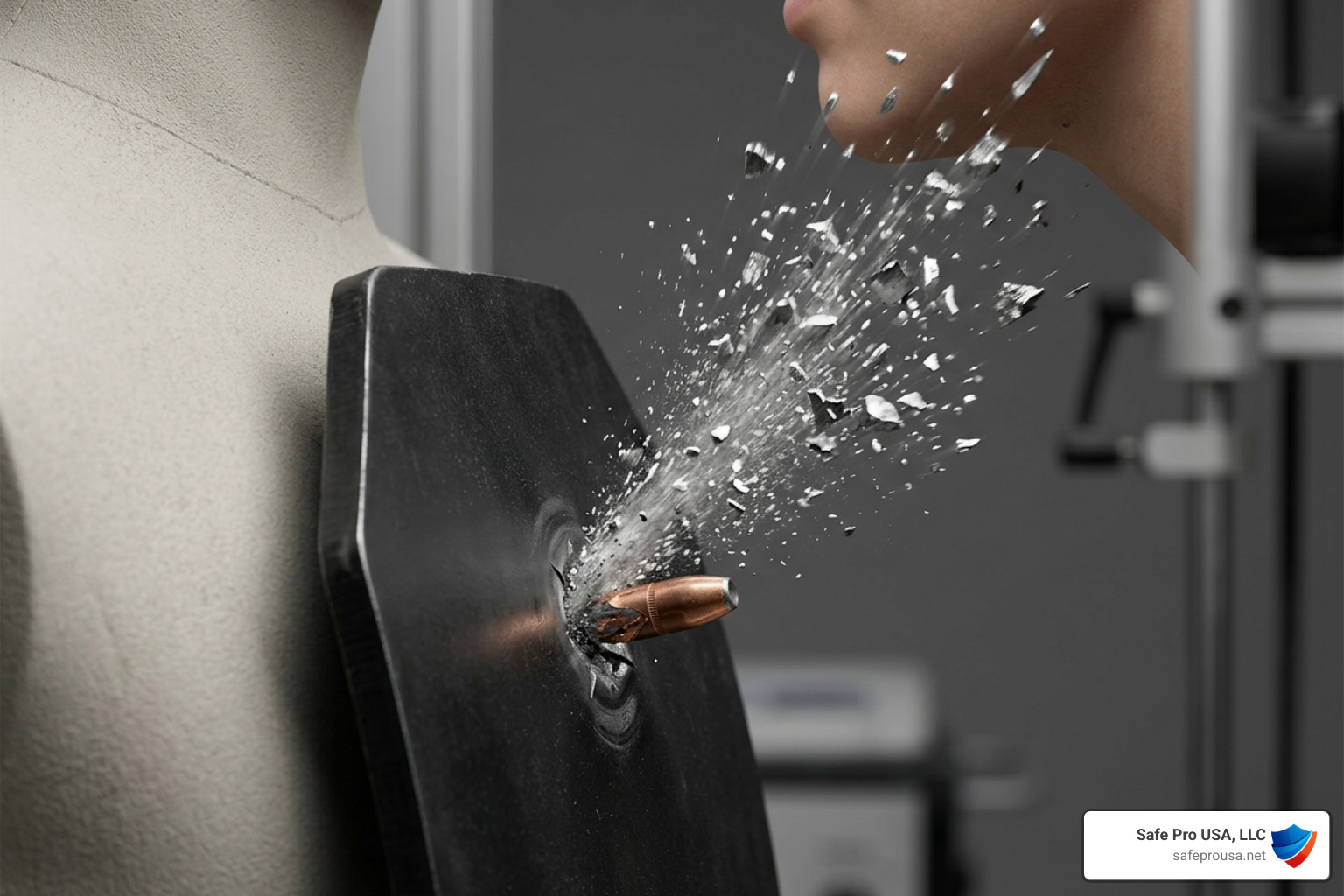
This fragmentation travels parallel to the face of the plate. In a standard tactical setup, this means the shrapnel is directed straight up into the wearer’s neck, throat, jaw, and face, or downward and outward into their arms and femoral arteries.
To combat this hazard, steel plates require a specialized spall-mitigation coating. These coatings are typically composed of proprietary polyurea or rubberized layers designed to trap the exploding shrapnel. However, these coatings have major limitations:
-
Added Bulk: A build-up coating capable of capturing fragments adds significant thickness and weight to the plate.
-
Single-Shot Reliability: While a coating may capture the fragmentation of the first impact, subsequent shots often shred the protective layer, allowing spall from later rounds to escape unimpeded.
-
Incomplete Protection: Even with a heavy build-up coating, high-angle impacts or extremely fast rounds can still shear through the rubberized barrier.
Modern composite and ceramic plates completely eliminate this risk. Because they capture the bullet within the body of the plate rather than shattering it on the surface, there is zero risk of spalling. To understand how material composition directly impacts your safety on the range or in the field, read our article on body armor steel plates.
Design, Fit, and Carrier Compatibility
The physical shape of your armor plate plays a massive role in your comfort, range of motion, and overall effectiveness. Hard armor plates are available in several distinct cuts designed to balance coverage with mobility:
-
SAPI Cut: Originally designed for the military's Small Arms Protective Insert program, this cut features moderate corner cuts at the top to allow for comfortable rifle shouldering while maintaining excellent coverage across the torso.
-
Shooters Cut: This profile features more aggressive diagonal cuts at the collarbone area, maximizing your range of motion when presenting a handgun or shouldering a long gun.
-
Swimmers Cut: The most aggressive cut, featuring deep slopes at both the top and sides. It is favored by maritime units and highly active operators who require maximum shoulder and arm mobility, though it sacrifices a portion of coverage along the outer edges of the chest.
In addition to the cut, the curvature of the plate is critical. Legacy steel plates are often flat or feature a simple single-curve bend. These designs do not conform well to the natural shape of the human torso, leading to hot spots, shifting, and discomfort during movement. Modern ceramic and composite plates are typically designed with multi-curve geometry, mimicking the natural contours of the chest and back to distribute weight evenly and sit securely close to your center of gravity.
When selecting a plate carrier, weight distribution is paramount. If you are running heavy plates, you will need a robust, heavily padded carrier with wide shoulder straps and a structured cummerbund to prevent the load from pulling down on your collarbones and lower back. Conversely, switching to lightweight ceramic or UHMWPE plates allows you to run minimalist, low-profile carriers that enhance your agility and breathability. For more information on matching plates to your operational gear, see our guide on hard armor rifle plates.
Frequently Asked Questions about Level 3 Armor
Can civilians legally own Level 3 armor plates?
Yes, in the vast majority of the United States, it is entirely legal for law-abiding citizens to purchase, own, and wear Level 3 body armor. However, there are a few important legal restrictions to keep in mind:
-
Federal Felon Ban: Under federal law (18 U.S.C. 931), it is illegal for anyone convicted of a violent felony to purchase, own, or possess body armor.
-
State-Specific Restrictions:
-
Connecticut: Citizens in Connecticut are prohibited from purchasing body armor online; all transactions must be conducted in person at a physical retail location.
-
New York: New York state law restricts the purchase and ownership of body armor to individuals employed in specific, approved professions (such as law enforcement, active military, and certified security guards).
-
Criminal Use: Committing a crime while wearing body armor carries severe sentence enhancements in almost every state jurisdiction.
Always verify your local and state regulations before purchasing any ballistic products.
How should hard armor plates be maintained and stored?
To ensure your plates perform flawlessly when it matters most, proper storage and care are essential:
-
Temperature Control: Store your plates in a cool, dry environment. Avoid leaving them in the trunk of a hot car, as extreme, prolonged heat can degrade the adhesives and backing materials used in composite and ceramic plates.
-
Moisture Management: Keep your plates clean and dry. If they are exposed to sweat or rain, wipe down the outer carrier and allow the plates to air-dry at room temperature away from direct sunlight.
-
Inspection Intervals: Regularly inspect your plates for signs of physical damage. Check the outer nylon wrapper for tears, and feel the edges of ceramic plates to ensure there are no cracks or delamination.
-
Shelf Life Considerations: While steel plates often feature long shelf lives due to their metallic composition, they remain incredibly heavy. Modern ceramic and UHMWPE plates typically carry robust 5- to 10-year manufacturer warranties and offer a vastly superior balance of protection and comfort over their operational life.
Will a Level 3 plate stop an AR-15 or AK-47?
A standard Level 3 plate is rated to stop a 7.62x39mm round fired from an AK-47 (including mild steel core projectiles). However, when it comes to the AR-15 (5.56x45mm / .223 Remington), the answer depends entirely on the plate's material:
-
Standard Steel Plates: Often fail against the common 5.56mm M193 round when fired at close range from a full-length barrel, because the high velocity (3,150+ fps) can bypass the steel's hardness.
-
Polyethylene (UHMWPE) Plates: Easily defeat high-velocity lead-core M193 rounds, but will struggle against steel-penetrator M855 Green Tip rounds unless specifically hybridized with a ceramic strike face.
-
Ceramic Plates: Provide the most comprehensive protection, easily defeating both high-velocity M193 rounds and steel-penetrator M855 Green Tip rounds.
Conclusion
While level 3 steel plates have served as a durable option in the past, modern ballistic threats require modern solutions. The heavy weight penalty, severe spall hazards, and vulnerability to high-velocity 5.56mm rounds make steel a challenging choice for the modern operator who values mobility, safety, and long-term physical health.
At Safe Pro USA, we are dedicated to manufacturing high-performance, American-made ballistic gear designed for military, law enforcement, and tactical professionals. As a Nasdaq-listed company (SPAI), we prioritize honest materials, clean design, and mil-spec quality. We firmly believe that your armor should protect you without becoming a physical burden, which is why we champion advanced, lightweight ceramic and UHMWPE technologies over heavy steel.
Ready to upgrade your protection with gear that won't weigh you down? Learn how to choose the perfect setup by reading our ballistic armor plates the essential guide to choosing the right protection.


