What You Need to Know About Body Armor Plates Before You Buy
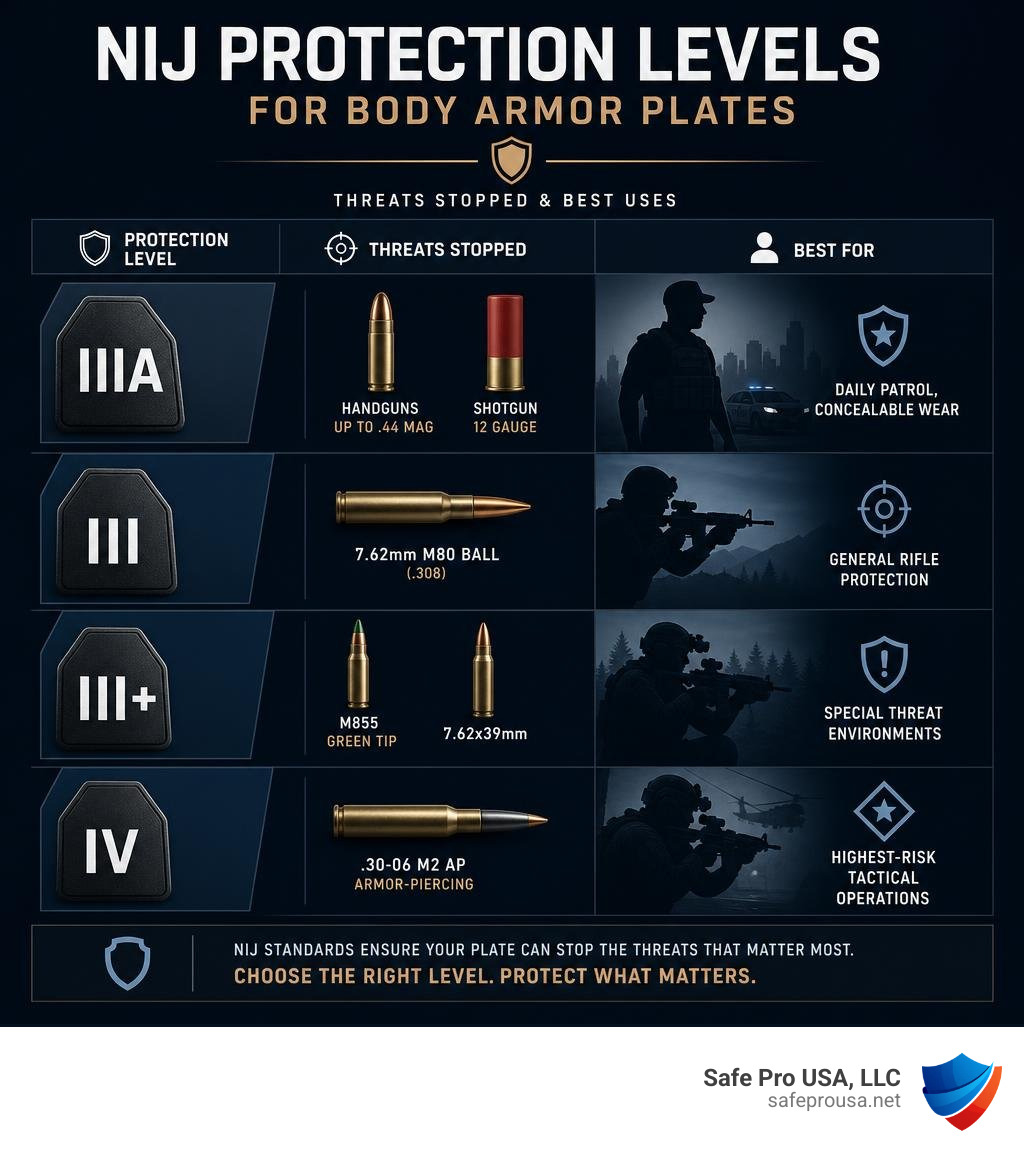
Body armor plates are rigid ballistic inserts designed to stop rifle rounds and other high-velocity threats that soft armor alone cannot defeat. Here is a quick breakdown of what they are and who needs them:
| Plate Level |
Threats Stopped |
Best For |
| Level IIIA |
Handguns up to .44 Mag, shotgun |
Daily patrol, concealable wear |
| Level III |
7.62mm M80 Ball (.308) |
General rifle protection |
| Level III+ |
M855 Green Tip, 7.62x39mm |
Special threat environments |
| Level IV |
.30-06 M2 AP armor-piercing |
Highest-risk tactical operations |
Choosing the wrong plate — or no plate at all — can be the difference between walking away and not. Whether you are in law enforcement, military service, or a prepared civilian, understanding what separates a reliable plate from an inadequate one is critical.
This guide covers every key factor: NIJ protection levels, materials, sizing, plate cuts, legal considerations, and how to match the right plate to your actual threat profile.
Understanding NIJ Protection Levels for Body Armor Plates
To make an informed choice, we must first understand the benchmark of ballistic safety: the National Institute of Justice (NIJ) standards. The NIJ has set body armor standards since 1972, ensuring that when tactical professionals and citizens buy protective gear, they know exactly what threats it can withstand.
When evaluating body armor plates, these standards tell us precisely what velocity and projectile weight a plate is rated to defeat. Let us break down the specific threat tiers so you can match your Armor Plates to the operational environment.
Level IIIA and Handgun Threats
Level IIIA represents the highest tier of traditional soft armor, though it is also available in ultra-thin hard composite inserts. This level is specifically engineered to defeat handgun threats.
-
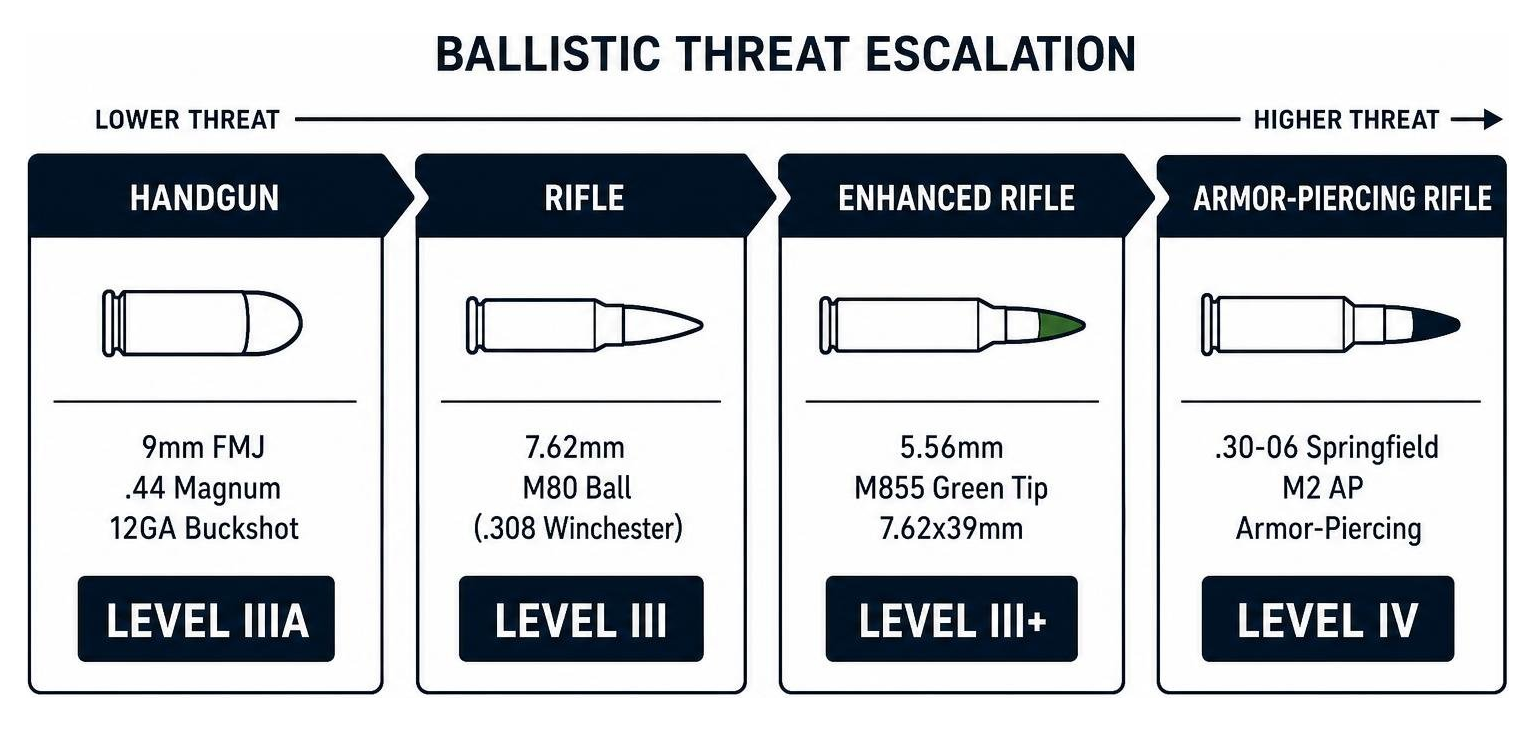
Specific Threats Stopped: Level IIIA stops all common handgun rounds up to .44 Magnum, as well as 9mm Full Metal Jacket (FMJ) rounds at velocities up to 1,430 ft/s. It also reliably stops shotgun rounds, including 12-gauge 00 buckshot and heavy lead slugs.
-
Blunt Force Mitigation: While highly effective against handguns, the flexible nature of soft IIIA armor means the kinetic energy is absorbed by dispersing it across the body. This can result in significant backface deformation (the dent the plate makes on the inside). Hard IIIA plates, though rigid, greatly reduce this blunt force trauma by stopping the bullet flat and spreading the impact energy across a solid surface.
Level III and Rifle Protection
If your risk profile includes rifle threats, Level III is your starting point. This is where we transition fully into hard body armor plates.
-
Specific Threats Stopped: Under NIJ Standard 0101.06, Level III plates are tested to stop six impacts of 7.62mm FMJ (M80 Ball / .308 Winchester) with a nominal projectile mass of 147 grains at a velocity of 2,780 ft/s. This level also easily defeats common intermediate rifle rounds like the AK-47’s 7.62x39mm lead-core rounds.
-
Composite Solutions: Our high-performance composite plates utilize advanced materials to stop these powerful rounds. While some legacy options rely on Level 3 Steel Plates, we focus on modern, lightweight composites that offer superior energy absorption without the physical burden of heavy metal.
Level III+ and Special Threats
You will often see the designation "Level III+" when researching modern tactical gear. It is important to know that Level III+ is not an official NIJ 0101.06 classification, but rather an industry-standard term used to describe plates that bridge the gap between Level III and Level IV.
-
Specific Threats Stopped: Standard Level III plates are actually vulnerable to certain high-velocity, small-caliber rounds. Level III+ plates are specifically rated to stop these "special threats," most notably the 5.56mm M855 "Green Tip" round (which features a mild steel penetrator core) and high-velocity M193 rounds moving at speeds exceeding 3,100 ft/s.
-
Why It Matters: In modern tactical environments, the M855 Green Tip is incredibly common. If you only have standard Level III protection, a high-velocity green tip can sometimes slip through. Opting for a special-threat-tested Level III+ composite plate ensures you are protected against these highly prevalent intermediate rifle threats.
Level IV Armor Piercing Protection
Level IV is the highest NIJ rating available for personal ballistic protection. It is designed for worst-case scenarios and high-intensity tactical operations where military-grade threats are present.
-
Specific Threats Stopped: Level IV armor is specifically tested to defeat armor-piercing rifle rounds. Specifically, it must stop at least one hit of a .30-06 Springfield M2 Armor Piercing (AP) round with a 166-grain projectile at a velocity of 2,880 ft/s.
-
The Ultimate Shield: Beyond the standard .30-06 AP, high-quality Level IV plates are capable of stopping multiple hits of high-velocity threats, including 7.62x51mm AP, 7.62x54R, and various enhanced-performance military rounds. Because of the sheer power of these projectiles, Level IV plates utilize advanced ceramic strike faces to shatter the hardened steel penetrators on impact. For more on how weight scales at this level of protection, you can consult our Level 4 Steel Plates Weight Guide to see how heavy alternative materials can get compared to composite systems.
Soft Armor vs. Hard Ballistic Plates
When configuring your defensive setup, one of the first decisions you must make is choosing between soft body armor and hard ballistic plates. Each has a distinct purpose, and they are often used together in a scalable protection system.
When to Use Soft Body Armor
Soft body armor is constructed from highly flexible, high-strength woven fibers such as para-aramids or specialized polyethylenes.
-
Concealability and Comfort: Because soft armor contours naturally to the torso, it is highly concealable and comfortable for extended wear. It fits easily under a standard uniform shirt or civilian clothing.
-
Daily Patrol and Handgun Protection: Soft armor is the standard choice for daily patrol officers, security personnel, and citizens who require protection against handguns (up to .44 Magnum) but do not anticipate facing rifle fire. It offers excellent multi-threat protection against handgun rounds, slash attacks, and blunt force impacts (such as vehicle collisions or falls).
When to Choose Hard Body Armor Plates
Hard body armor plates are rigid inserts made of ceramics, ultra-high-molecular-weight polyethylene (UHMWPE), or composite blends.
-
Rifle Defense: Soft armor cannot stop rifle rounds; the high velocity and pointed geometry of rifle bullets will slice right through flexible fibers. Hard plates are absolutely necessary to stop rifle threats.
-
Tactical Operations and Active Shooter Response: Hard plates are designed to be worn in external plate carriers. They are the primary choice for military personnel, SWAT teams, and active shooter response kits. If your threat assessment includes any possibility of encountering a rifle—whether an AR-15, AK-47, or hunting rifle—you must utilize Hard Armor Rifle Plates.
Ceramic and UHMWPE vs. Alternative Materials
The materials used to manufacture body armor plates dictate how heavy they are, how they absorb energy, and how they perform under multi-hit scenarios. At Safe Pro USA, we prioritize advanced ceramics and UHMWPE composites over legacy materials like steel. Let us look at how these materials compare.
The Advantages of Ceramic and UHMWPE Plates
Modern material science has revolutionized personal protection. By combining ultra-hard ceramics with highly ductile backing materials, we can achieve unparalleled protection.
| Material |
How It Works |
Key Advantages |
| Ceramic (Alumina, Silicon Carbide, Boron Carbide) |
Shatters the incoming bullet on impact, destroying its geometry and dispersing its kinetic energy. |
Stops armor-piercing rounds; extremely hard; excellent multi-hit performance when paired with advanced backings. |
| UHMWPE (Ultra-High-Molecular-Weight Polyethylene) |
Uses layers of high-strength plastic fibers that catch the bullet like a catcher's mitt, melting and binding around the projectile. |
Incredibly lightweight; floats in water; excellent protection against standard lead-core rifle rounds. |
-
Weight Reduction: Advanced composite plates are significantly lighter than traditional options. Using high-purity ceramic technology paired with premium backing materials allows us to reduce plate thickness and weight without sacrificing ballistic integrity. This directly translates to improved mobility, speed, and endurance in the field.
-
Energy Absorption: When a high-velocity round strikes our Ceramic Rifle Plates, the ceramic face fractures locally, absorbing a massive portion of the bullet’s kinetic energy. The remaining energy is caught by a composite backing made of UHMWPE, which prevents backface deformation and keeps the wearer safe.
The Limitations of Heavy Steel Plates
While some legacy systems still utilize steel, we strongly advise against relying on Body Armor Steel Plates for modern tactical defense.
-
Spall and Fragmentation Hazard: When a high-velocity bullet strikes a steel plate, the metal does not deform or shatter the bullet in the same way ceramic does. Instead, the bullet splatters upon impact, creating a 360-degree ring of razor-sharp shrapnel (known as spall). Without incredibly thick, heavy specialized coatings, this fragmentation will travel upward into the wearer's neck, chin, arms, and groin, causing catastrophic secondary injuries.
-
Extreme Weight: Steel is incredibly heavy. Wearing two steel plates can quickly fatigue a user, putting unnecessary strain on the spine, knees, and ankles. This weight restricts tactical agility and slows reaction times.
-
Why Safe Pro USA Chooses Composites: We believe that those who protect our communities deserve the absolute best in defense technology. By focusing exclusively on advanced ceramic and UHMWPE composites, we provide gear that is lighter, safer, and completely free of the dangerous spall risks associated with steel.
Sizing and Ergonomics of Ballistic Inserts
Even the most advanced ballistic plate is useless if it does not fit you properly. Proper sizing ensures that your vital organs—your heart, lungs, and major blood vessels—are fully protected while allowing you to move, run, bend, and shoulder your rifle without restriction.
Single-Curve vs. Multi-Curve Plates
The curvature of a plate dictates how comfortably it sits against your torso.
-
Single-Curve Plates: These plates are curved along a single horizontal axis, resembling a simple cylinder segment. While functional, they do not conform well to the natural, complex three-dimensional curves of the human chest. They can create pressure points and feel blocky.
-
Multi-Curve Plates: Multi-curve plates are contoured along both the horizontal and vertical axes. This ergonomic design mimics the natural shape of the human torso. Multi-curve plates distribute weight much more evenly across your shoulders and chest, greatly reducing fatigue during long operations and keeping the plate securely in place when you move.
SAPI, Shooters, and Swimmers Cuts
The shape, or "cut," of the plate determines the balance between coverage and mobility.
-
SAPI Cut: Originally designed for the US Military's Small Arms Protective Insert program, SAPI plates feature simple angled top corners. They offer an excellent balance of vital organ coverage and arm mobility.
-
Shooters Cut: This cut features more aggressive angles at the top corners than a SAPI plate. It is specifically designed to maximize your range of motion, allowing you to easily shoulder a rifle and present a handgun without the plate interfering with your arm movement.
-
Swimmers Cut: The most aggressive cut available, Swimmers cut plates feature deeply scooped-out top corners. Originally designed for maritime operations where maximum swimming and paddling mobility was required, they provide ultimate upper-body agility but offer slightly less coverage across the upper chest.
How to Size Your Body Armor Plates
Many people make the mistake of sizing their body armor plates based on their t-shirt size. This is incorrect. Your plate size is determined by the physical dimensions of your vital organs. To find your correct size, use a flexible measuring tape to take two measurements:
-
Width (Nipple to Nipple): Measure the distance between your nipples. The plate should sit comfortably between them, covering your heart and lungs without pinching your armpits when you reach forward.
-
Height (Collarbone to Belly Button): Locate the soft notch at the top of your sternum (just below your collarbone). Measure down to a point roughly two inches above your belly button when standing straight. This ensures that when you sit or bend over, the top of the plate does not push up into your throat and the bottom does not dig into your lap.
Common standard plate sizes include:
-
Small: 8.75” x 11.75”
-
Medium: 9.5” x 12.5” (Fits the majority of average-sized adults)
-
Large: 10.25” x 13.25”
-
Extra Large: 11” x 14”
For more guidance on selecting the perfect configuration, check out our comprehensive resource on Armor Plates.
Frequently Asked Questions
Navigating ballistic protection can bring up many technical and legal questions. Here are the answers to the most common inquiries we receive.
What is the difference between NIJ certified and NIJ tested?
This is one of the most critical distinctions a buyer must understand.
-
NIJ Certified: When a plate is officially NIJ Certified, it means the manufacturer submitted the plate to an approved, independent laboratory for the full NIJ Compliance Testing Program. The plate successfully passed all rigorous environmental conditioning and ballistic tests, and is officially listed on the NIJ Compliant Product List (CPL). The manufacturer is also subject to ongoing quality assurance audits to ensure every batch produced meets the certified standard.
-
NIJ Tested / Rated: If a product is labeled as NIJ Tested or Tested to NIJ Standards, it means the manufacturer sent the plate to an independent lab, or tested it in-house, using the NIJ protocol, but did not go through the formal and ongoing certification process. While many reputable manufacturers conduct honest independent testing, some bad actors use this phrasing to sell unverified, low-quality gear. Always verify whether a plate appears on the official NIJ Compliant Product List for absolute peace of mind.
Do ballistic plates expire and how should they be maintained?
Yes, all body armor has a recommended service life, though expiration does not mean the plate suddenly stops working on a specific date.
-
Shelf Life: Most composite and ceramic plates carry a manufacturer warranty of 5 to 10 years. Over time, the ballistic materials, especially the adhesives and backing materials, can slowly degrade due to environmental exposure.
-
Environmental Factors: Extreme heat, moisture, UV exposure, and constant vibration can accelerate this degradation. Never store your plates in a hot vehicle trunk or in direct sunlight. Store them flat or vertically in a cool, dry closet.
-
Inspection and Care: Regularly inspect your plates for signs of wear, such as cracks in the ceramic cover, fabric delamination, or soft spots in the backing. If a ceramic plate is dropped onto a hard surface, it should be x-rayed or replaced, as micro-fractures in the ceramic can compromise its ability to stop subsequent hits. To explore where defense technology is heading to solve these durability challenges, read about Futuristic Military Body Armor.
Is it legal for civilians to own body armor in the United States?
Yes, in the vast majority of the United States, it is 100% legal for law-abiding civilians to purchase, own, and wear body armor.
-
Federal Law: Under federal law, 18 U.S. Code Section 931, it is illegal for anyone convicted of a violent felony to purchase, own, or possess body armor.
-
State Restrictions: While civilian ownership is federally protected, some states have enacted specific restrictions. For example, Connecticut prohibits online sales of body armor to civilians, requiring all transactions to take place in person. New York passed legislation restricting the sale of certain types of body armor to civilians outside of specific approved professions. Always check your local and state laws before purchasing to ensure full compliance. You can also consult official state government portals or legal databases to understand regional distribution guidelines.
Conclusion
At Safe Pro USA, we are dedicated to providing those on the front lines—and those protecting their families—with elite, American-made defense technology. As a subsidiary of the Nasdaq-listed Safe Pro Group (SPAI), we manufacture high-performance ballistic protection gear designed to meet the most demanding mil-spec standards.
By prioritizing honest, advanced materials like high-purity ceramics and ultra-lightweight UHMWPE composites, we deliver gear that maximizes both protection and physical agility. We believe you should never have to sacrifice your mobility to stay safe.
If you are ready to upgrade your defensive setup with premium, reliable armor, explore our guide on how to Choose the Right Ballistic Protection or browse our complete lineup of American Made Body Armor. Stay safe, stay mobile, and trust your defense to the professionals.


